Stone Slab Inventory: Excel Spreadsheets vs. Digital System
There was a time when the owner knew every slab. Today, customers demand delivery timelines in hours, remnant pieces with exact dimensions, real-time availability of every slab in stock. Manually managed inventories are hitting structural limits — not due to lack of effort, but because of poor visibility and the wrong digital tools.
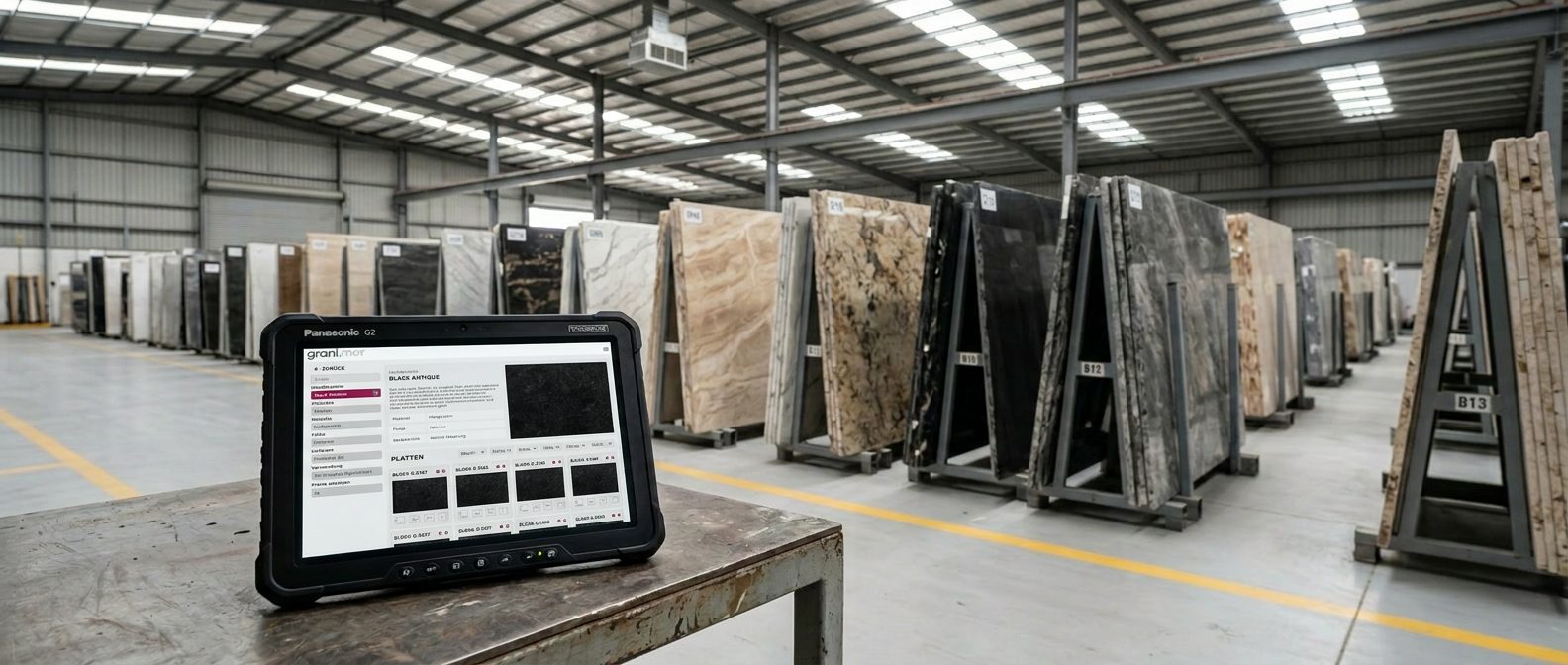
There was a time when the owner knew every slab
In the past, slab inventory was managed by one person. They knew which slab stood where, which one was reserved for which project, where remnants were stored — pure head knowledge. Personal presence replaced any form of documentation.
Two parallel developments are now forcing a rethink. Labour shortages mean businesses must transfer knowledge from people's heads into systems. At the same time, customers demand a speed of decision-making and a level of precision that nobody expected ten years ago. Delivery timelines in hours, not days. Remnant pieces with exact dimensions. Real-time slab availability on demand.
Manually managed inventories can no longer deliver this. The question is not whether the switch will happen — but when every business will make it, and with which digital tools.
What Excel cannot do in a slab warehouse
Unique pieces, not unit counts
Excel thinks in quantities. A cell reads "Portoro, 3cm, 12 pieces". What it doesn't capture: which of those twelve slabs has which dimensions, what visual characteristics it carries, which block it originated from, and what price that specific slab justifies. In theory, all of this can be mapped in a spreadsheet. In practice, the effort is immense — and keeping it up to date is a constant time drain. So Excel lists get shortcuts: information is left out, photos aren't linked, dimensions are only roughly recorded. The result: poor analytical capability and no way to create targeted quotes directly from the list.
Reservations without system integration
In Excel, a reservation can be noted as a comment. What Excel cannot do: make that information visible across the rest of the business and its various software tools. Quotes, projects, and inventory live in separate files — sometimes on different computers belonging to different employees. The result is familiar to many businesses: a slab is planned into a quote and simultaneously sold to another customer. The error surfaces during picking — not when the quote was sent, not when the order was placed.
Idle stock as unrecognised sales potential
Slabs have been sitting in the warehouse for years. Often only the owner knows what they're worth. Idle stock is tied-up capital — money that has been spent, sits on the balance sheet, and generates no return. Without a structured overview, there is no targeted reduction of idle slabs, no active remnant utilisation, and no reliable answer to the question of what can still be gained from a specific leftover batch for a project.

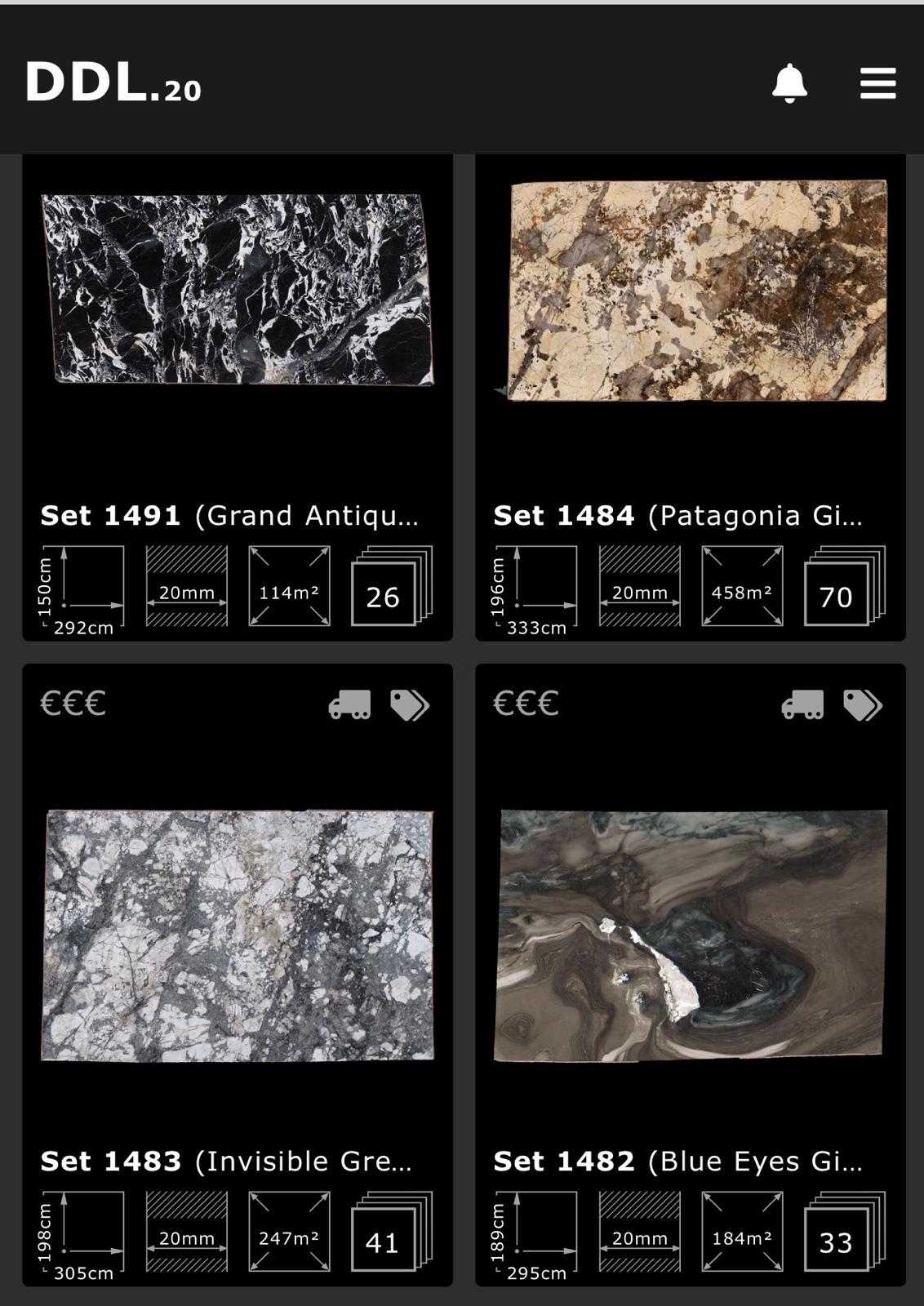
Left: Slabs in the warehouse — different varieties, different qualities, a pure stock overview. Right: The same materials in the DDL Steingalerie — with photo, dimensions, thickness, and stock count. Customer communication can run via individual photos sent through WhatsApp, or through a targeted link from the Steingalerie where customers can directly view material details, availability, and prices.
Every station produces information — if it's captured digitally
Delivery. Quality inspection. Warehouse intake. Project reservation. Cutting. Dispatch. Every slab in an active stone business moves through these stations — and each station produces critical information for the business.
Digital tracking means: the status is captured at the moment of the event, not retroactively entered into a spreadsheet. The difference sounds like information overload — and this is precisely where digitalisation steps in: bundling this information clearly and presenting it where it's needed. In practice, this means always working with concrete data per slab, per unique piece.
What customers expect today sounds something like this: "We have 28 square metres of this material in raw slabs in stock. Based on the submitted layout, we can cut the project from existing inventory. We can overlay the submitted plan with actual slabs by tomorrow, so we can review the visual result together before cutting."
This promise requires that the inventory is reliably known at the moment of the conversation — in dimensions, quality, and availability. A warehouse run on memory or spreadsheets cannot deliver this reliably.

What potential lies in these slabs?
Slab-based inventory management — every slab as its own object
DDL manages every slab as a unique object: with its own photo, its own dimensions, storage location, surface finish, and real-time reservation status. As soon as a slab is assigned to a project, it is instantly marked as reserved in the warehouse — visible to every employee, without having to ask. The scanner app enables stocktaking without a clipboard: scan the barcode, confirm the status, move on. Stone businesses that have switched to scanner-assisted stocktaking report 85% less time spent — DDL live customer Granimor on Lake Constance is one of the documented examples. Learn more: slab-based inventory management with DDL.
Explore inventory managementWhen inventory and quoting grow together
Digitalisation as the starting point
Every slab is recorded once. Photo, dimensions, storage location, surface finish, block origin — these are the key details entered immediately. Beyond that, individual additions are possible at any time. This can happen via handheld scanner directly in the warehouse, or start gradually with the next goods receipt. From the first scan, the inventory is structured — searchable, filterable, analysable.
Real-time reservation
When a slab is assigned to a project or planned into a quote, it is immediately allocated in the warehouse and marked as reserved. Employees can only reassign the same slab after consultation and release from the previous quote or project. The team sees the status clearly the moment a quote is sent or a slab is allocated to a project.
From warehouse straight to quote
Inventory, reservation, and project planning run in one system. A quote is created directly from available stock — with real slab photos, exact dimensions, and confirmed availability. This gives sales and customer advisory a foundation where promises are reliable: fast response, precise calculation, no backtracking after the order is placed.
Speed and accuracy as competitive advantage
A digital slab inventory is not an investment in administration. It is an investment in sales capability.
Stone businesses that can respond instantly instead of in days — with 100% accurate information — win orders that others lose. Those who can offer concrete planning from existing stock — with dimensions, photos, and reserved areas — become the preferred partner. Those who first have to check the warehouse to see if the promised slab is still there lose trust at the next enquiry.
This doesn't start with a complete system overhaul. It starts with the first structured inventory — and the first quote based on verified availability.
Related reading: Why natural stone projects fail — before the first cut is made.
Explore DDL Solutions

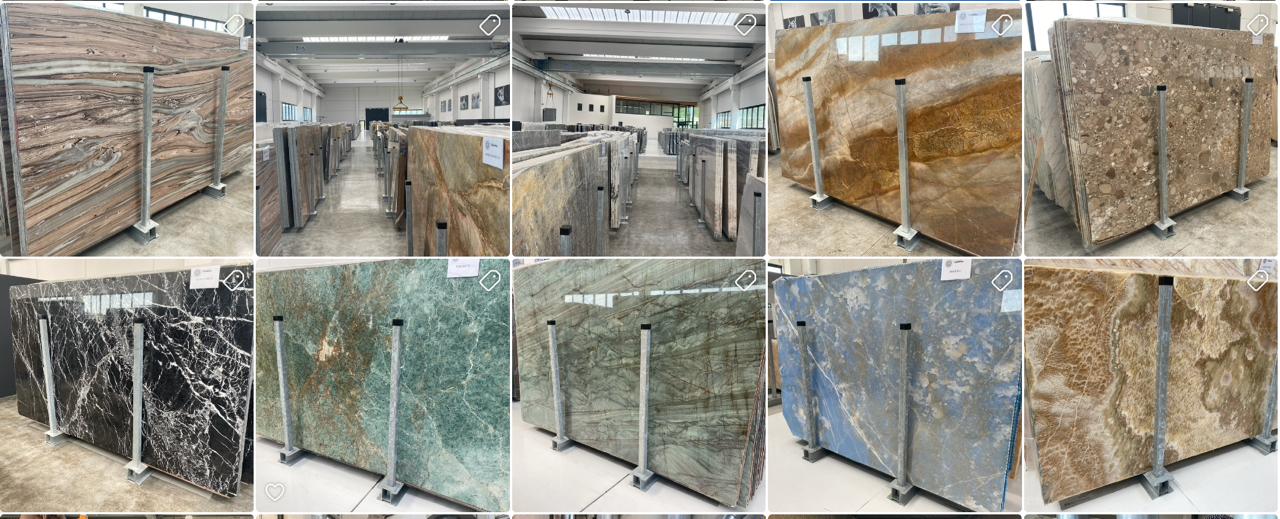
Your warehouse as a sales tool — a concrete start in 30 minutes
Jan Keller shows how slab-based inventory management works in a real business — from the first scan to the first quote drawn from stock.